

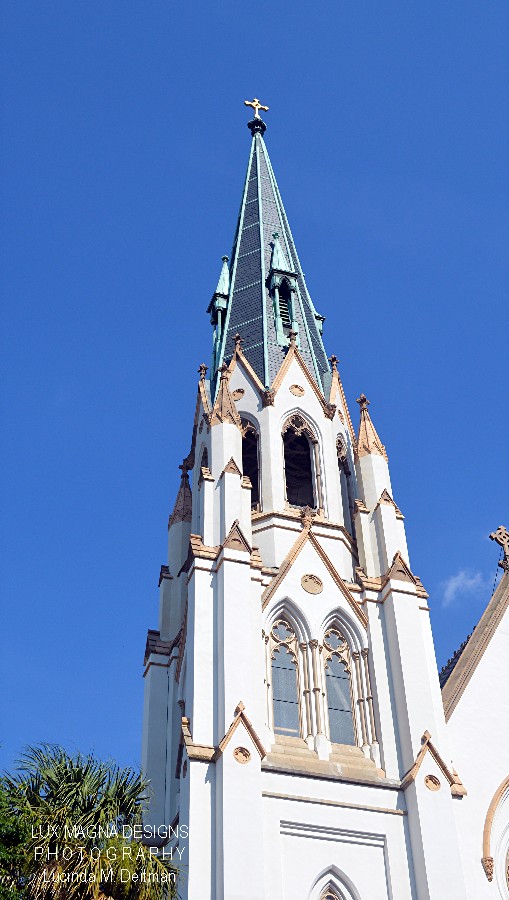


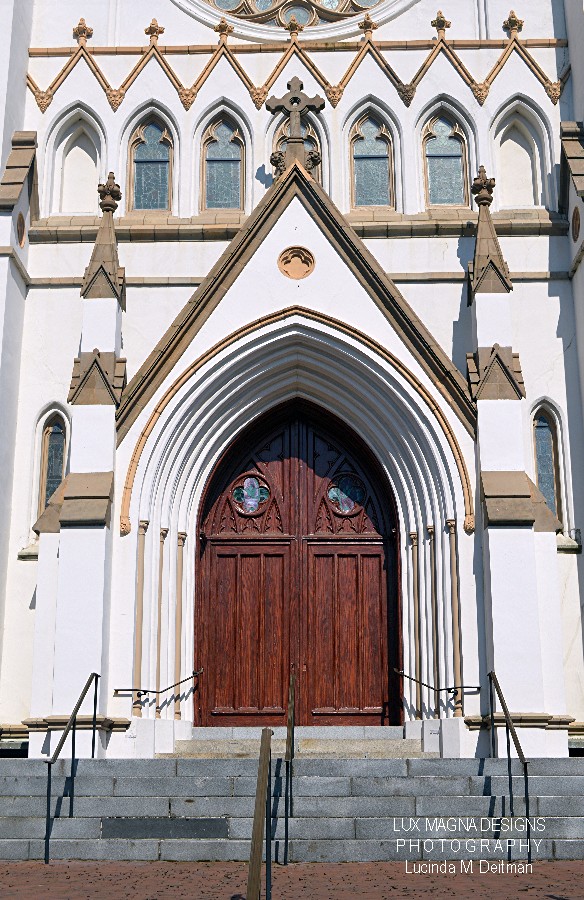


The Cathedral Basilica of St. John the Baptist in Savannah, Georgia, is a stunning example of Gothic Revival architecture and a cherished landmark in the city’s historic district. Originally constructed in 1873, the cathedral was dedicated in 1876 under the guidance of Bishop Ignatius Persico. Tragically, a fire in 1898 destroyed much of the structure, but the resilient congregation rebuilt it by 1899. The cathedral’s twin spires, added in 1896, soar 214 feet into the sky, making it an iconic feature of Savannah’s skyline. Its intricate stained glass windows, imported from Austria, and the ornate interior design reflect the craftsmanship and artistry of the era.
The cathedral is part of the Savannah Historic District, which was added to the National Register of Historic Places in 1966. It was later designated a minor basilica by Pope Francis in 2020, further cementing its significance as a place of worship and historical importance. The exterior features pointed arch windows, decorative tracery, and a steep gabled roof, all hallmarks of Gothic Revival design. The cathedral’s grandeur and historical legacy make it a must-see destination for visitors and a source of pride for the local community.
 Lux Magna Designs